Thursday, 24 September 2015

Microfinance in Zeze - transforming womens' lives with small loans

In August I spent a week in Zeze village and met the chair, vice chair and secretary of the microfinance group, as well as many of the women who have received loans. 

I  also visited many of them in their homes and businesses and spoke to the Village Chairman, Village Executive Officer, and chair of MVG, who are running the scheme who all confirmed the positive impact the scheme is having on the village. 


Petronia had her loan in May, thanks to a new injection of funds from Wabia. She buys palm oil from farmers in the fields and resells it in the market, making approx. £8 profit per week.  Recently her 8 month baby started excreting blood and she was able to take her to the doctors and buy medicine.  Without her business she said she would have been unable to do that.
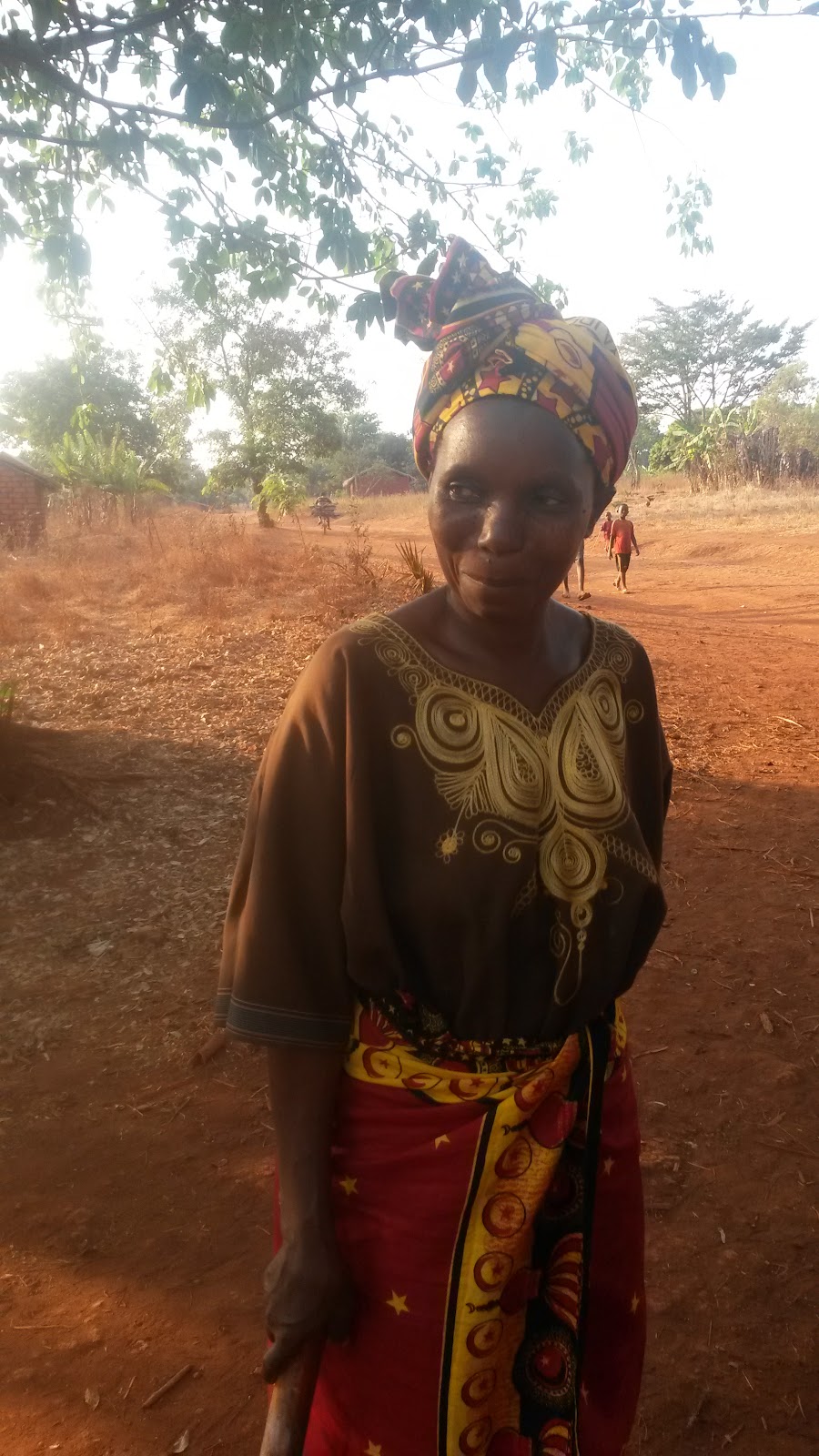
Pendo buys petrol in large containers and decants it into litre bottles which she sells in the market and on the road.  Her profits mean that she is able to pay for her son, who was unemployed, to study to be a mechanic.

Edita received her loan last month.  She is making bible covers for 80p that she sells for £1 in Kasulu, the town 40 km away that she visits twice a week.  She had sold 40 to a shop there the previous day.  She is saving to purchase a second sewing machine so her husband can also make them at the same time.  She also wants to branch into mpesa (mobile money) 

Josrene had an initial £18 loan which she repaid,  then a £50 loan in May.  She collects maize and beans from farmers in the field and then grinds flour and then sells in bulk to buyers from Kigoma.  She is saving to build a bigger house for her family with larger storage capacities as she wants to sell wholesale directly in Kigoma in the future.

Godliva had a second loan in June.  She also sells beans and maize, but also soap. She gets a profit of 80p  per box for this.  She is saving money to get a soap factory so she can make her own soap.  This would cost £120 but she estimates it would bring her "20 a week profit.
What was generally striking was the pride with which the women talked about their businesses.  They have noticeably grown in confidence since I met them in January, and have a higher status in their family and in the village as a whole. Originally I was told that there was resistance from some men in the village, concerned that women getting loans would be a threat to their authority.  

Now the same men ask Benedicto when their wives can get a loan.  It was touching to see a number of the women working closely with their husbands as partners in the business, whereas previously they worked much more separately. This appears to have had a positive effect on their relationships, which was confirmed by the women themselves. In the training women were told “Don’t use your loan to exploit your husband, rather money should be a tool for strengthening the love in your family”.   They seem to have taken this to heart!

Tuesday, 1 September 2015

Bringing broadband to Zeze School

School life in Zeze is rather different from the one I remember.  For a start most pupils walk for over an hour to get there.  They also have to carry water with them to clean the school  as there is no water source nearby.  Their parents are subsistence farmers who struggle to provide them with food and uniforms.  

There is no electricity in the village and kerosene is expensive, so they struggle to study after dark.  So Benedicto, TDT's enterprising local representative has set up student study groups.  Each group of 5 students was given one solar light, cost £4, which they share to study at night. Students are extremely ambitious.  They realise that doing well at school could be the only route out of poverty for themselves and their families. 

There are very few text books in the school, and none for research or further reading, so when I visited in June I brought a raspberry pi computer with downloaded content such as Wikipedia and Khan Academy videos on it.  As there is no electricity in the school they run this from a portable battery which they recharge in the headteacher's house which has solar panels.

But now Zeze has the opportunity to have a free satellite broadband installation, courtesy of funding from the UK Space Agency.  Very few of the students have ever left the village.  There are no female staff. The headteacher, Mr Mabhuye is very keen for the  girls to have successful role models to boost their confidence.  He is also keen to develop links with schools in the UK to expand their horizons and share ideas. 


However there is a catch.  They need to install solar power in the school by the end of September in order to order to benefit from this offer.  At a cost of £780 this is way beyond the scope of the school. If you would like to contribute to this project you can do so here.  All donations gratefully received. 

Wednesday, 1 July 2015

Bees and Sunflowers in Zeze


I was last with Benedicto in Zeze in January.  Then he was talking about his dream of constructing bee hives to improve incomes in Zeze village.
Now, thanks to many of you the hives are in place.  It hasn’t been without its challenges.  Moving the wood was delayed due to flooding during the rainy season, which also led to delays in the wood drying out sufficiently to make the hives, but last week the remaining hives were hung in the trees near the Moringa field, making 63 in total.  I’m glad I wasn’t here to witness this as it looked like a very precarious operation.


Already 12 hives are occupied by bees, and Benedicto is confident that by the end of July all the hives will be full, meaning they’ll be on track to harvest honey in October as planned.


In January a donor had given me £9 to give Benedicto, which he spent on Sunflower seeds.  These he planted during the rainy season and has just harvested more than 10 times as many.  

I (briefly) helped his father in shelling these, ready to press into oil to sell.

Benedicto never asks for money.  I asked him why, as the sunflowers had been so successful, he isn’t planting more now. He explained he can only grow them in the rainy season as his land is far from water sources so irrigation is impossible now.  When pressed on what he would need to do this he explains.  If he digs down 25m with a spade he can borrow from his neighbour, he could set up a solar pump to power a drip irrigation scheme. 

Such a system would transform agriculture here, and with help from generous donors he will start this in July...I've been promised avocados next time I visit.. 

Saturday, 27 June 2015

Christina, the circumciser turned anti FGM activist

I was last at the Safe House in early January, just after the cutting season had finished.  Most of the girls who had sought refuge then were slowly being reunited with their families.  Sophia, the social worker and Rhobi, were painstakingly negotiating affidavits with the parents, guaranteeing that they would not cut their daughters or marry them against their will. With thirty four girls the parents refused to cooperate and so they remained at the Safe House.  At that time these girls were very shy, and many visibly traumatised by their experience.

So it is heart-warming to be back in Mugumu to see what a difference 5 months has made.  There are now computer lessons in a room of 30 computers donated by a London school, and girls on the tailoring course are now selling items they have made in a shop on the premises.  Girls who have never had the chance to go to school can now read and write.  Their growth in confidence is astounding. 

On Tuesday the girls performed a song they had composed about FGM to over 500 people at an event for International Day of the African Child. 

Ten of the girls passed their primary education and so attend the local secondary school.  Their headmaster and teachers told me although they have missed a lot of education they are trying so hard they are sure they will catch up.  I set up a projector
and raspberry pi computer with content from World Possible in both the Safe House and the school so they can access Wikipedia and Khan Academy offline, giving them a huge range of educational content.  I also set installed 200 Swahili and English e-books from African Storybook.  These were a great hit for girls who have never had access to books, as were the Swahili audiobooks and maths cartoons from Ubongo.


Word games my sister in law donated like scrabble and Headbanz where players have to ask yes no questions to guess the card on their head caused great hilarity and enabled girls to practice their English in a fun way...


I also met Christina, a circumciser, who has previously cut girls in the local village of Kebanchabancha.  She witnessed the anti FGM road show Rhobi organised in her village and decided to stop cutting and publicly destroyed her tools.  This cost her dearly, she lost her source of income her husband divorced her, and she has had to move away from the village due to the pressure of people trying to persuade her to change her mind.  However she told me she did not regret her decision and now plans to become a peer educator helping persuade other circumcisers follow her lead.You can hear her story here.

So, the tide is turning..

But the Safe House still faces huge challenges.  Now it is known as a place of refuge, the local police bring people here who have nowhere else to go..  Lucy, an albino rape victim, Sophia and Veronica, two abandoned children and Msambo with her baby, beaten so badly by her husband that she lost 3 teeth.

It still needs a perimeter fence, to stop people wandering in, a dining hall and kitchen, and a car, so that girls in the villages can be reached, and there is not a repeat of the incident in December when the car broke down so 5 escaping girls were captured by their parents..

So, if you are able to help, everyone at the Safe House, and the girls at risk of FGM in Serengeti would be extremely grateful..

Sunday, 21 June 2015

A library on an SD card – for less than a fiver…


I met Omar in Itongoitale, a small village an hour out of Shinyanga.  He teaches Geography and History in the primary school here.

Itongolitale has no electricity and the only water supply is from ponds shared with cattle.  There is no mobile signal and only very occasional minibuses into town.  Some people have radios but batteries are scarce, only five people have solar.  So many people are entirely cut off from the outside world.  They rarely have the means to leave the village, and were not even aware of the Tanzanian election happening in October.  If there is a death, or other newsworthy event, in the next village, someone will walk the 15km to come and tell people face to face..

Malaria and water borne diseases are rife.  People don’t boil or treat their water and there has never been a deworming programme here.  I was told that the water was safe for them because they are used to it but it would be dangerous for me.

There are no computers in the village, and Omar has never used one.  But they teach IT in the school – by drawing pictures of keyboards and hard drives on the blackboard…

Omar told me he liked reading, so I asked him to show me his books.  He had three:  a Swahili/English dictionary, a photocopy of a university text book on African History, and a Geography text book for 13 year olds.  Yet Omar is very affluent by the standards of the village.  He has a smart phone which he uses when he goes into town each month to pick up his salary.  


I gave him a 16Gb sd card for his phone, with hundreds of ebooks in Swahili and English, plus health videos from Thare Machi on avoiding malaria and the need to boil drinking water. He promised to share this content in the school, and as we left he was proudly demonstrating it to a colleague..


A library on an SD card in a village without computers – cost:  less than £5..

Monday, 9 February 2015

Raspberry Pi in Masekelo

Bringing Wikipedia to a school without electricity

Masekelo secondary school in Shinyanga has many challenges: there's no electricity or water, so each pupil needs to collect 5 litres of water each day and carry it to school.  Until Tanzania Development Trust gave them a grant in November there were insufficient desks or chairs and many had to sit on the dirt floor.

The government has decreed that every secondary school must have science laboratories by the end of February.  No money was provided for this ; they should come from.parental contributions alone.  When your parents are subsistence farmers this is challenging.

The school has few text books or resources and a dire shortage of maths and science teachers,  but the dedication of its headteacher and staff now mean they have the best results of any government school in the district.

When I visited in September the dynamic headteacher,  Steve Mihambo,  told me of his dream of a computer room,  once they had power.

So I brought a Raspberry Pi computer, run from an external battery, with a 32gb SD card with content downloaded from WorldPossible.  This includes Wikipedia schools edition,  2000 maths and science videos from Khan academy,  800 classic books and various health resources.  A wifi stick in the Pi means any nearby smartphone, tablet or laptop can access all this content.


I demonstrated this to the teachers and school board on the 5 donated tablets I'd brought,  plus a couple of staff phones.  They were astounded.  "It's like a miracle", said the board chair.  "Now we are in the 21st century", added a teacher. 

You can follow the progress of this project, and the school in general, on their Facebook Page.


If you would like to know more,  or have an unneeded tablet or laptop you'd like to go to a good home,  please email me at j.chapman@tanzdevtrust.org

Saturday, 31 January 2015

Investing in honey production in Zeze village

Transforming rural lives with bees..

I first met Benedicto by chance in September and was very impressed by the cooperative he founded and his meticulously costed plans to avert poverty in his village by developing agriculture.  I returned to Zeze this week and spent two nights in the village finding out more.

Zeze is 41km from the nearest town and electricity supply.  Water is problematic.  Almost all of the inhabitants are farmers growing maize and beans, with an average annual income per family of around 300,000 shillings (£112).   This explains why many of the children have ragged clothes and no shoes.

Benedicto and his group have many plans to raise income, including growing more lucrative crops such as Moringa.  Currently his immediate concern is to put in hives before March 15th when the bees begin to swarm. He has worked out that by sourcing the wood from one farmer and carrying it on foot to the local fundi he can get the hives made for around £20 each.  He estimates each hive will generate 30 litres of honey and he has already found buyers willing to buy in bulk.  Therefore when he harvests in October he should be able to make a good profit that can be used to support projects in the village. 

His problem is capital.  He has identified
150 good sites for hives. Currently he has funds for 15 hives.  He would like to set up at least 40.  Therefore he is offering anyone who invests £20 in a hive now a return of £25 in November when the honey is sold.  That's a return on investment far better than your bank, and a good cause to boot..  

If you would like to invest in a hive in Zeze village, or to know more about this project please email j.chapman@tanzdevtrust.org.